The Hidden Risks of Dehydration
Jul 20, 2026 | Urgent Care | Share:
Dehydration on a hot day doesn't require a workout, a hike, or hours of yard work. Your body begins pulling fluid from the bloodstream the moment it detects a rise in core temperature, whether you're active or not. A day that feels relaxing to you can be a high-output day for your body's cooling system.
Humidity, water immersion, and alcohol each accelerate fluid loss through independent mechanisms, and they often overlap on a single summer afternoon. Understanding how and where that fluid loss happens makes it easier to stay ahead of it.
Your Body Starts Losing Fluid Before You Feel Hot
The hypothalamus, a small structure at the base of the brain, monitors your core temperature the same way a thermostat monitors a room. When it detects a rise, it triggers a sequence of cooling responses. Your body doesn't wait for you to notice the heat. By the time you reach for a glass of water, both responses are already well underway.
The first response is vasodilation. Blood vessels near the skin's surface widen, redirecting blood away from the core and toward the skin, where heat can transfer into the surrounding air. You can see this happening in real time: skin flushes pink or red as blood moves closer to the surface. The process is effective at releasing heat, but it also shifts fluid distribution away from your organs and toward your extremities.
The second response is sweat. Sweat glands pull water and electrolytes directly from the bloodstream and deposit them onto the skin. A common misconception is that sweat itself cools you down. It doesn't. Evaporation does the work. As sweat changes from liquid to vapor on the skin's surface, it pulls heat energy with it. The sweat your body produces is the raw material; evaporation is the mechanism that lowers your temperature.
Both of these responses draw fluid from the bloodstream, and neither one requires physical activity to activate. Your body doesn't distinguish between a rise in core temperature from exercise and a rise from sitting outside on a hot afternoon. The trigger is the temperature change itself, not the cause of it.
A person sitting on a patio in 90-degree heat, reading a book with no intention of moving, is losing fluid through both vasodilation and sweating. The rate varies with conditions, but the process is continuous. That person will eventually feel hot or thirsty, but the body has already been pulling fluid from the bloodstream for a while before those signals arrive.
Humidity Undermines Your Body's Cooling System
Evaporation is the mechanism that cools the body. As sweat converts from liquid to vapor on the skin's surface, it pulls heat energy away. But evaporation depends on the surrounding air having room to absorb that moisture. Humid air already holds a high concentration of water vapor, which slows the rate at which sweat can evaporate. Instead of vaporizing, sweat accumulates on the skin, drips off the body, and soaks into clothing without completing the cooling process.
The hypothalamus detects the lag between how much cooling the body needs and how much it's getting. Its response is to activate more sweat glands and increase sweat output. Fluid and electrolyte losses accelerate, but the cooling benefit doesn't increase. Think of an air conditioning unit running at full capacity in a house where someone left all the windows open. The system works harder, draws more energy, and never catches up.
Think of an air conditioning unit running at full capacity in a house where someone left all the windows open. The system works harder and harder, draws more and more energy, and never catches up.
This is why a humid 85-degree day in Birmingham can pull more fluid from the body than a dry 95-degree day in Phoenix. The temperature is lower, but evaporation does less of the cooling work per unit of sweat produced. The body compensates by producing more sweat, and the net fluid loss climbs.
The visible result -- dripping sweat and damp clothing-- can make it seem like the body is doing its job. In a sense, it is. The sweat glands are responding as designed. But the cooling system as a whole is falling behind, and the body spends more fluid than the temperature alone would lead you to expect.
Dehydration That You Might Not Notice
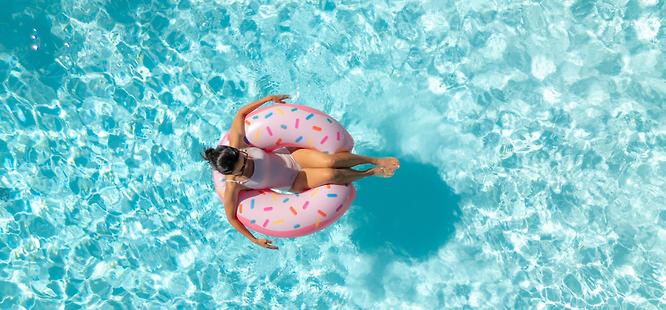
Floating in a pool or lake on a hot afternoon feels like one of the lowest-risk summer activities. But water immersion layers multiple fluid-loss mechanisms on top of each other, and the water itself masks the signals that would otherwise tell you to drink.
When your body is submerged, water exerts pressure against the skin and tissues of the limbs. This hydrostatic pressure pushes fluid from the arms and legs toward the chest cavity, temporarily increasing the volume of blood returning to the heart. The kidneys interpret that shift as a sign the body is holding too much fluid, and they respond by increasing urine output to bring volume back to baseline. Anyone who has spent time at a pool with children has seen this in action. The constant bathroom trips aren't from the cold water or from drinking pool water. The kidneys are doing what they're designed to do when they detect a volume increase in the chest.
While the kidneys work to shed fluid, the rest of the body's cooling system continues to run. Vasodilation and sweating don't stop because the skin is wet. Core temperature regulation responds to internal heat, and a body absorbing sun and ambient heat while floating at the surface still needs to cool itself. The difference is that sweat rinses away or mixes with the surrounding water, so you never see it.
That invisible sweat removes one of the body's most reliable warning systems. On dry land, flushed skin, a film of sweat, and a dry mouth all prompt you to reach for water. In the pool, your skin stays wet, your face may feel cool, and nothing triggers the instinct to hydrate. A full afternoon of floating, with no laps swum and no exertion beyond climbing in and out, can produce real fluid and electrolyte losses that never register until you're back on land and the headache sets in.
The Impact of Alcohol on Hydration
Most people notice that drinking beer on a hot day means more frequent trips to the bathroom. That's not just because you're consuming liquid. You're producing more urine than the volume of the drink accounts for, and the reason is hormonal.
Your kidneys regulate how much water leaves the body through urine. Under normal conditions, a hormone called vasopressin signals the kidneys to reabsorb water and return it to the bloodstream, which concentrates urine and helps the body hold onto fluid. Alcohol suppresses vasopressin production. With less of the hormone circulating, the kidneys stop reclaiming water and let it pass straight through. The result is a net fluid loss that exceeds the volume of the drink itself.
A 12-ounce beer delivers 12 ounces of liquid, but the suppressed vasopressin response can cause the kidneys to release more than that over the following hour. The body ends up with less water than it had before the drink.
The three fluid-loss mechanisms operate independently of each other, and they stack. Sweating pulls fluid from the bloodstream to cool the body. Hydrostatic pressure from water immersion triggers the kidneys to shed volume. Vasopressin suppression from alcohol opens a third drain. A beer or a cocktail by the pool on a humid afternoon activates all three at once.
Staying Hydrated
On a hot day, your body needs more water whether you exercise or not. A reasonable target is 16 to 32 ounces per hour while you're outside. Small, steady sips absorb through the gut lining more efficiently than a full bottle gulped down at once.
Water alone doesn't replace everything sweat removes. Sodium, potassium, and other electrolytes leave the bloodstream with each round of sweat production, and those minerals need to come back. Sports drinks or electrolyte powders can help, especially options with lower sugar content. Food works too. A meal or a salty snack restocks electrolytes through digestion, so skipping lunch on a pool day deepens the deficit in ways that water can't reverse on its own.
If you're drinking alcohol, matching each beer or cocktail with a glass of water helps offset the extra urine output caused by vasopressin suppression. It won't eliminate the fluid loss, but it slows the rate at which your reserves drop.
Thirst is a lagging signal. By the time your brain registers it, your body has already moved into a fluid deficit. Drinking on a schedule, rather than waiting until you feel thirsty, keeps you closer to baseline.
Watch for signs that dehydration has progressed beyond what oral fluids can correct: a headache that won't resolve, dizziness, dark urine, nausea, or muscle cramping. These indicate a deficit that has outpaced your body's ability to catch up through drinking alone, and an urgent care visit for IV fluids and monitoring is a reasonable next step. Heat stroke, marked by confusion, loss of consciousness, or a body temperature above 104 degrees, is a medical emergency. If you or someone you love has symptoms of heat stroke, call 911 or go to your nearest emergency room.
Most mild dehydration resolves with oral fluids, rest, and shade. But a headache that persists after drinking water, dark urine, dizziness, nausea, or muscle cramping that doesn't improve over 30 to 60 minutes can signal a deficit the gut can't correct fast enough on its own. IV fluids bypass the digestive system and restore volume and electrolytes directly into the bloodstream, which is why urgent care treatment works well for moderate dehydration and early heat exhaustion.
MedHelp has four urgent care locations across Birmingham, all open seven days a week with on-site IV fluid treatment and no appointment required. If you're unsure whether what you're feeling will pass or needs medical attention, a provider can evaluate your hydration status, check your vitals, and treat you the same day.